
Ghost Camaro
On December 1st, 1918, following in the shadows of The Great War, the unlikely formation of a federation in the Balkan peninsula took place. From 1918 to 1929, this union was known as the Kingdom of Serbs, Croats, and Slovenes. In 1946, they adopted a more recognizable name: Socialist Federal Republic of Yugoslavia (SFRY). In the mid-20th century, the Balkan region became colloquially known as the “powder keg of Europe” due to the intense nationalist movements, rising ethnocentrism, and the strategic location for numerous imperial rivalries that consistently threatened to boil into armed conflict.
On June 25th, 1991, Slovenia declared independence from SFRY, ultimately illustrating the fragility of the improbable union, as just two days later on June 27th, 1991, what became known as the Ten-Day War commenced. Slovenia’s departure subsequently acted as a catalyst for a grotesque and ferocious war to take place. This declaration effectively initiated the dissolution of Yugoslavia, and allotted other countries in the Federation an admissible opportunity to declare their own independence.
April 6th, 1992 marks the beginning of the Bosnian War. The former federation promptly devolved into a lawless, abhorrent, and immoral playground providing humanity with an assemblage of ruthless self-destruction and barbarism. Over 100,000 people of all ethnic groups were killed. 2.2 million were displaced. Widespread rape became an epidemic. Over 3,000 children were killed.
Immediately following the outbreak of the war, outside influence began playing a role. Albania, Russia, the US, NATO, Islamic countries, and numerous volunteer fighters from a mulititude of countries.
One of these volunteers was a Danish former-special operator known as Helge Meyer. Meyer spent a career in special operations as a part of the Jægerkorpset (Jaeger Corps). By the time the Bosnian War began, he was already in his mid-40s and retired from the military.
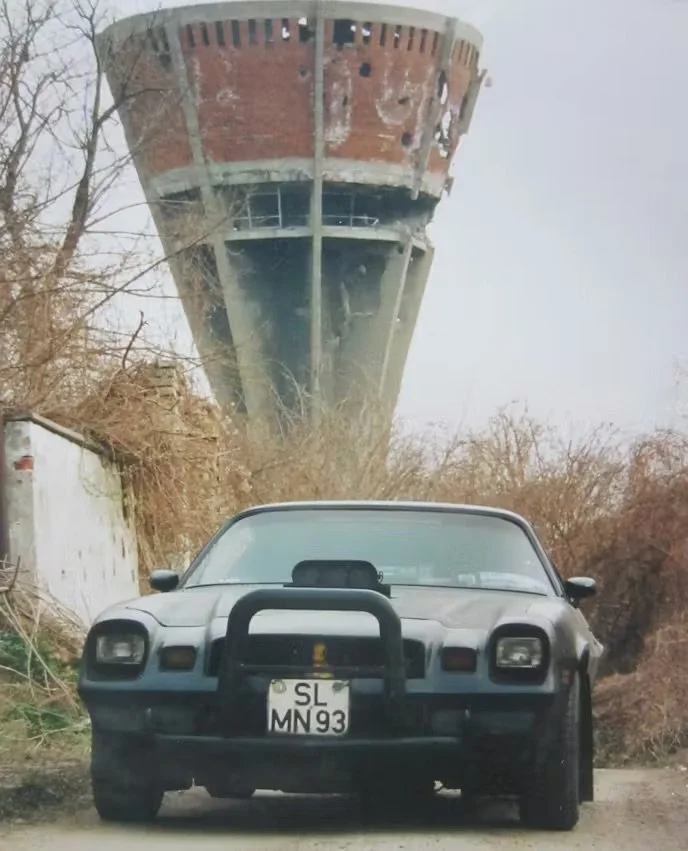
Learning of the hellscape that was occuring in the Balkans, Meyer received a calling from God to assist in any way he possibly could. He drove to Rhein-Main Air Base near Frankfurt, Germany and pitched his idea to the US Air Force. Initially, US service members believed it to be a joke. But upon learning that Meyer wanted no financial compensation but just needed assistance, they reluctantly agreed to help. His goal: deliver humanitarian aid to the wartorn region. Meyer’s idea was to drive a 1979 Chevrolet Camaro into the battlefield. But with the help of the United States military, his vehicle was outfitted with armor, run-flat tires, low-visibility black paint, NV and thermal cameras, and even included the addition of nitrous oxide for additional power. The modified vehicle increased its stock hp from 180 to around 220, with an upward capability of 440hp with use of the nitrous oxide. After the US military was able to raise an additional $12,000 for food, water, medicine, diapers, clothing, and even toys, Helge Meyer’s stage was set.
He was primarily starting his missions in Tuslz, Bosnia, using the city as is base of operations as the city was relatively safe and possessed a heavy UN presence. When departing from Tuslz, his Camaro would often times be stocked with upwards of 800lbs of supplies. Navigating through debris, minefields, constant gunfire, and craters from indirect fire barrages, Meyer was willingly and knowingly leaving relative safety for the sake of those in need. On his more than 100 supply runs and over 100,000 miles, he routinely encountered armed checkpoints controlled by various factions. Most times, these armed men were bewildered at the sight of a blacked-out American muscle car maneuvering its way into a Balkan warzone. Meyer relied on his boldness and negotiation abilities to bypass most checkpoints effortlessly. As he would approach the devastated settlements that were his objectives, the roar of his Camaro became synonymous with a shimmer of hope and relief for the civilians living in the small fractured villages.
He would go on to recollect countless times that he made his way into villages only to be initially met with skepticism from the locals and how the shift from fear to trust could happen within minutes. Typically, vehicles entering a town meant soldiers were inbound. But after children would make their way towards his vehicle, civilians would realize he was there to help and flock to receive what goods he had. Numerous times he was met with small arms fire while traversing the land. Though he was never wounded, he was once struck by a 9mm round which his kevlar helmet stopped. Even with such close calls, he continued using his faith as motivation, believing that fear was a condition that had to be confronted directly. He also believed that the only weapon he needed was his Bible. His Camaro become a symbol of God’s grace for the trapped people of the former federation.
Leaving the comfort of his own safe country, he was able to bring relief to the people of the region trapped in an unnecessary war. Meyer delivered nearly 40 tons of aid over the course of three years, was repeatedly fired upon, evaded capture, and transported sick and wounded out of the battlefield. All in the name of humanitarianism.
His black-clad Camaro became known as the Ghost Camaro.
Helge Meyer became known as Gods Rambo.
His seemingly daft endeavors into the Balkans became known as the Bosnian Express.